Bridge profile
Grosvenor Railway Bridge, London
Pimlico and Battersea, London, England
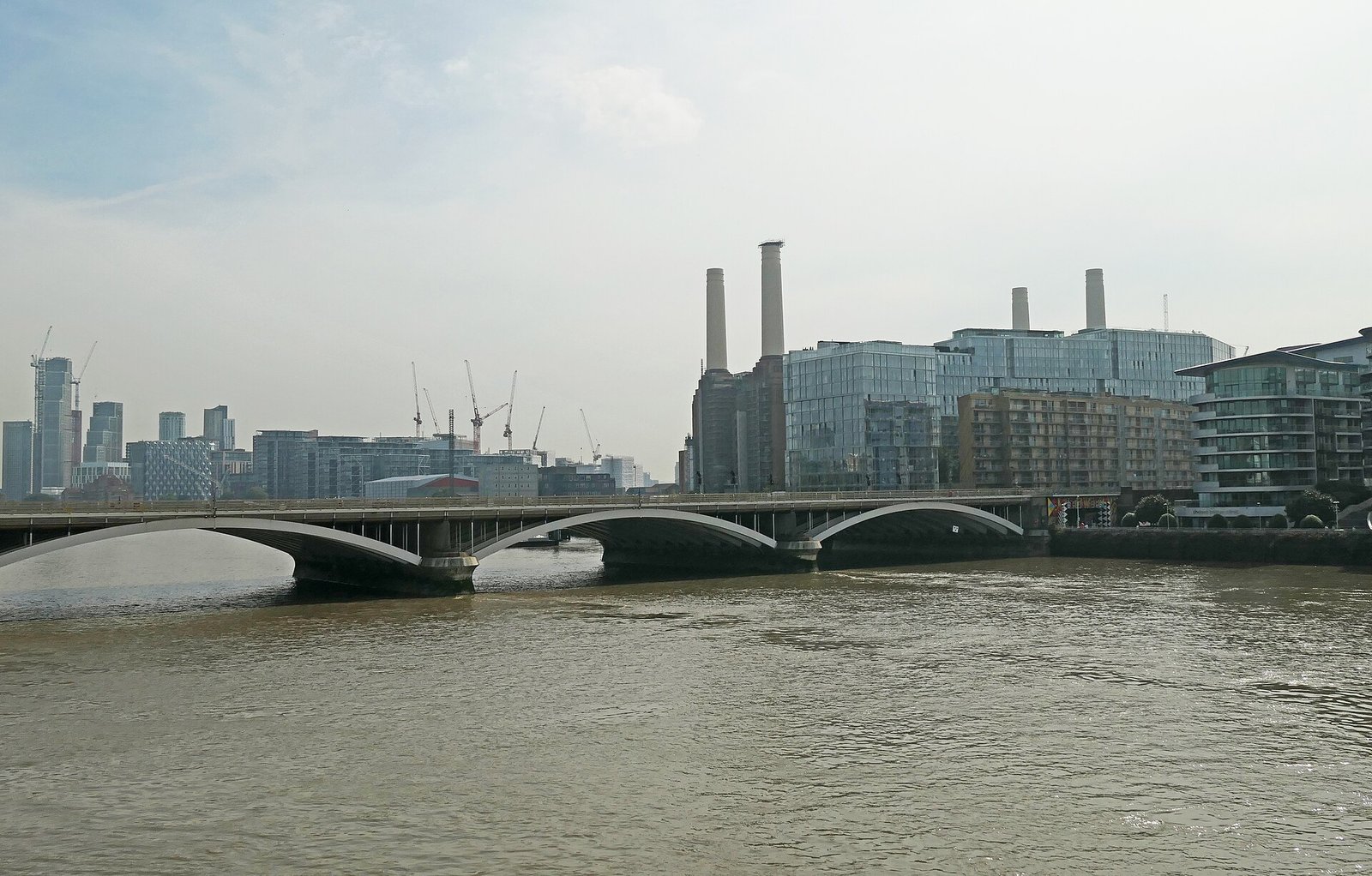
Grosvenor Railway Bridge carries trains into London Victoria across a broad sweep of steel arches, following the route of the first railway bridge over the central Thames.
At a glance
Key facts
Visit and use
History
Alternative names
Victoria Railway Bridge
People and construction
Engineer
Sir John Fowler (original bridge), Freeman Fox & Partners (1960s reconstruction)
Builder / main contractor
Dorman Long & Co. (1960s reconstruction)
Ownership and maintenance
Owner
Network Rail
Maintained by
Network Rail
Design and dimensions
Grosvenor Railway Bridge is easy to miss despite being one of London’s busiest river crossings. It has no public walkway, decorative towers or famous viewing platform. Most people experience it through the window of a train heading into or out of London Victoria.
Its importance is much greater than its quiet appearance suggests. When the original bridge opened in 1860, it became the first railway bridge to cross the Thames into central London. The broad structure seen today is the result of repeated widening and an extraordinary reconstruction completed while trains continued running.
The short version
Ten railway bridges hiding inside one
Grosvenor Railway Bridge carries the railway between Battersea and Pimlico on its final approach to London Victoria. The present crossing consists of ten narrow steel bridge structures placed beside one another, creating what appears from a distance to be one enormous bridge.
Why was Grosvenor Railway Bridge built?
By the middle of the nineteenth century, railway lines had reached the southern side of London but struggled to enter the West End. The River Thames stood between the railway companies and the valuable districts around Westminster, Belgravia and Buckingham Palace.
Parliament authorized the Victoria Station and Pimlico Railway in 1858. Its purpose was to carry several railway companies from Battersea, across the Thames and into a new central terminus.
Engineer Sir John Fowler designed the river crossing. Construction began in 1859, and the first trains crossed into the western side of Victoria station on October 1, 1860.
The Network Rail history of London Victoria explains how the bridge and station allowed railway services from southern England to enter the West End.
Was Grosvenor Bridge London’s first railway bridge?
Yes. Grosvenor Railway Bridge was the first railway bridge to cross the Thames into central London.
The opening changed the geography of London rail travel. Passengers arriving from southern England no longer needed to end their journey on the south side of the river and continue by road.
The first bridge carried two railway tracks. It was originally known as Victoria Railway Bridge, reflecting its direct connection with the new station.
Other central London railway crossings followed. These included Hungerford Railway Bridge, Cannon Street Railway Bridge and Blackfriars Railway Bridge.
Why was Grosvenor Railway Bridge widened?
The success of Victoria station placed immediate pressure on the new crossing. More railway companies wanted access, while the original two tracks could not handle the growing number of services.
London, Chatham and Dover Railway trains began using the crossing in 1862. Great Western Railway services followed in 1863, bringing trains built for different track gauges onto the same route.
Construction of another bridge immediately beside the original began in 1865. Designed by Sir Charles Fox, it opened in December 1866 and provided additional tracks.
The crossing was widened again in 1907. Instead of replacing the older sections, engineers continued placing new railway structures beside them. Grosvenor Bridge gradually became wider and more complicated as London Victoria grew.
Did you know?
It is really ten bridges
The modern crossing is divided into ten narrow bridge structures placed side by side. Each was designed to carry one railway track, allowing engineers to replace the bridge gradually without closing every route into Victoria.
How was Grosvenor Railway Bridge rebuilt without stopping the trains?
By the 1960s, the collection of Victorian bridge structures was no longer suitable for the weight and frequency of modern trains. British Rail began a complete reconstruction in 1963.
Closing every railway line into Victoria was not a realistic option. Instead, the bridge was rebuilt one track at a time.
Engineers closed one track, removed its old bridge section and installed a new steel structure. Once that track returned to service, work moved to the next. This repeated process allowed trains to continue crossing throughout most of the project.
The work required temporary platforms, barges, divers and cofferdams in the Thames. Large steel sections were manufactured away from the bridge and brought into position for installation.
Freeman Fox and Partners designed the reconstruction, while A. H. Cantrell served as the principal project engineer for British Rail. Dorman Long and Company manufactured the new steel bridge sections.
The British Film Institute documentary about rebuilding Grosvenor Bridge provides a remarkable view of the work, including trains crossing above construction taking place in the river.
How does the present Grosvenor Railway Bridge work?
The modern bridge has four main river spans. Each span contains a row of steel box section arches placed beside one another.
A steel railway trough sits between each pair of arches. The trough holds the ballast and track while transferring the weight of passing trains into the arches and down toward the piers.
The arrangement means that each railway track has its own narrow supporting bridge. Together, the individual structures form a crossing approximately 54 meters wide.
The bridge can accommodate ten tracks, although nine are currently used. The separate structures also make it possible to inspect or work on one part of the crossing without treating the entire bridge as a single deck.
How much of the original bridge remains?
Most of the visible bridge dates from the reconstruction completed between 1963 and 1967.
The Victorian arches and railway decks were removed, but the cores of the original river piers remained. Engineers enlarged and enclosed them in concrete to support the new steel structures.
This makes Grosvenor Railway Bridge both old and relatively modern. Trains still follow the route created in 1860, and parts of the original foundations remain beneath them, but the main structure carrying today’s railway services is a product of the 1960s.
Six important dates
Grosvenor Railway Bridge timeline
1858
Parliament authorizes the railway connection into Victoria.
1860
The first railway bridge across the central Thames opens.
1866
A second bridge opens beside the original crossing.
1907
Another widening adds capacity for more trains.
1963
Reconstruction begins while trains continue running.
1967
The modern ten section bridge is completed.
How do boats pass beneath Grosvenor Railway Bridge?
Grosvenor Railway Bridge has four curved river arches, but they are not all used in the same way.
The Port of London Authority identifies the second and third arches as the principal working arches for river traffic. Navigation lights help vessels identify the correct openings, particularly in darkness or poor visibility.
The first arch is affected by nearby moorings, while the fourth is closed to navigation. This channels most passing river traffic through the two central openings.
The Port of London Authority guide to Thames bridges provides the navigation arrangements and clearance information used by vessels approaching the crossing.
A bridge seen in motion
Around 1,000 trains a day
When the reconstruction documentary was released in 1968, Grosvenor Railway Bridge was described as carrying around 1,000 trains every day. Its appearance may be understated, but its role in London’s railway network has always been enormous.
Can you walk across Grosvenor Railway Bridge?
No. Grosvenor Railway Bridge carries railway tracks and does not have a public pedestrian walkway or cycle lane.
The bridge can be seen from riverside paths near Pimlico and Battersea, as well as from nearby Chelsea Bridge. Views from the southern bank reveal the full width of the railway crossing and the repeated steel arches beneath the tracks.
Grosvenor Bridge stands between Chelsea Bridge and Vauxhall Bridge. A riverside walk between those crossings provides several views of the railway bridge without requiring access to the railway itself.
Visitors continuing farther west can also see the illuminated Albert Bridge, which offers a very different example of Victorian bridge design.
Research
Grosvenor Railway Bridge sources and further reading
Explore the railway histories, engineering records and official navigation information used to research this bridge profile.
-
The history of London Victoria station and Grosvenor Bridge
Network Rail -
Victoria station and London’s first Thames railway bridge
London Museum -
Railway Bridge Across the Thames
British Film Institute -
Navigation beneath Victoria Rail Bridge
Port of London Authority -
Ownership of London’s railway crossings
London Assembly -
Historic view of Grosvenor Railway Bridge
London Picture Archive
Information checked November 9, 2026.