London’s bridges are full of details that most people never notice. Look beyond the roadway and you can find bronze women, stone birds, golden ships, heraldic dragons and mythical beasts quietly watching over the city.
Some celebrate engineering and public service. Others mark political boundaries, royal ancestry or the wildlife of the River Thames. A few are so well hidden that thousands of people pass them every day without realizing they are there.
The short version
Look below the roadway
The best bridge decorations are rarely positioned where drivers can see them. Look at the piers, towers, lampposts, parapets and river facing sides. Many of London’s most interesting bridge details were designed to be seen from boats or the riverbank.
01 · Vauxhall Bridge
Eight bronze women beneath the roadway
The eight bronze figures attached to the piers of Vauxhall Bridge are among London’s most ambitious bridge decorations. They represent the work and responsibilities of the city around them, but their position below the roadway makes them surprisingly easy to miss.
On the upstream side, Frederick Pomeroy’s figures represent Agriculture, Architecture, Engineering and Pottery. Their objects help reveal their identities. Agriculture carries a shepherd’s crook and corn, Engineering holds a steam engine and mallet, while Architecture presents a miniature St Paul’s Cathedral.
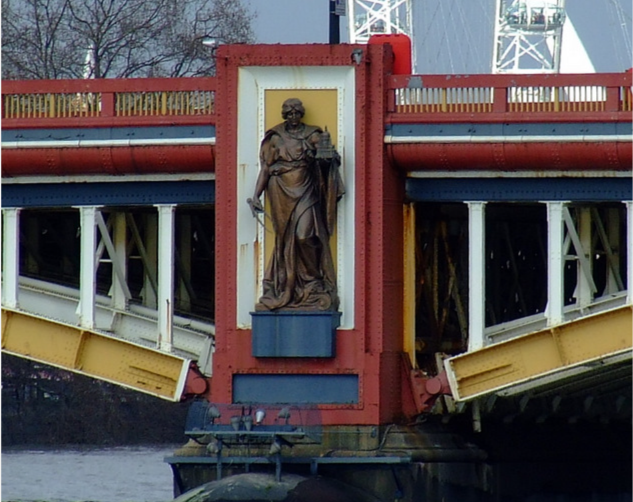
Alfred Drury’s four figures face downstream and represent Government, Education, Fine Art and Science or Astronomy. Together, the eight women turn the bridge into a monument to the practical and intellectual life of Edwardian London.
Historic England’s listing for Vauxhall Bridge describes the sculptural scheme as unique among British river crossings. The figures are best viewed from the Thames Path, the riverbank or a passing boat.
02 · Blackfriars Bridge
Birds arranged by their relationship with the river
The carvings on Blackfriars Bridge are not simply decorative birds chosen at random. Their positions reflect the changing character of the Thames.
The piers on the eastern side, facing downstream toward the estuary and the sea, are decorated with seabirds. On the western side, facing upstream toward the inland Thames, the carvings represent freshwater birds.
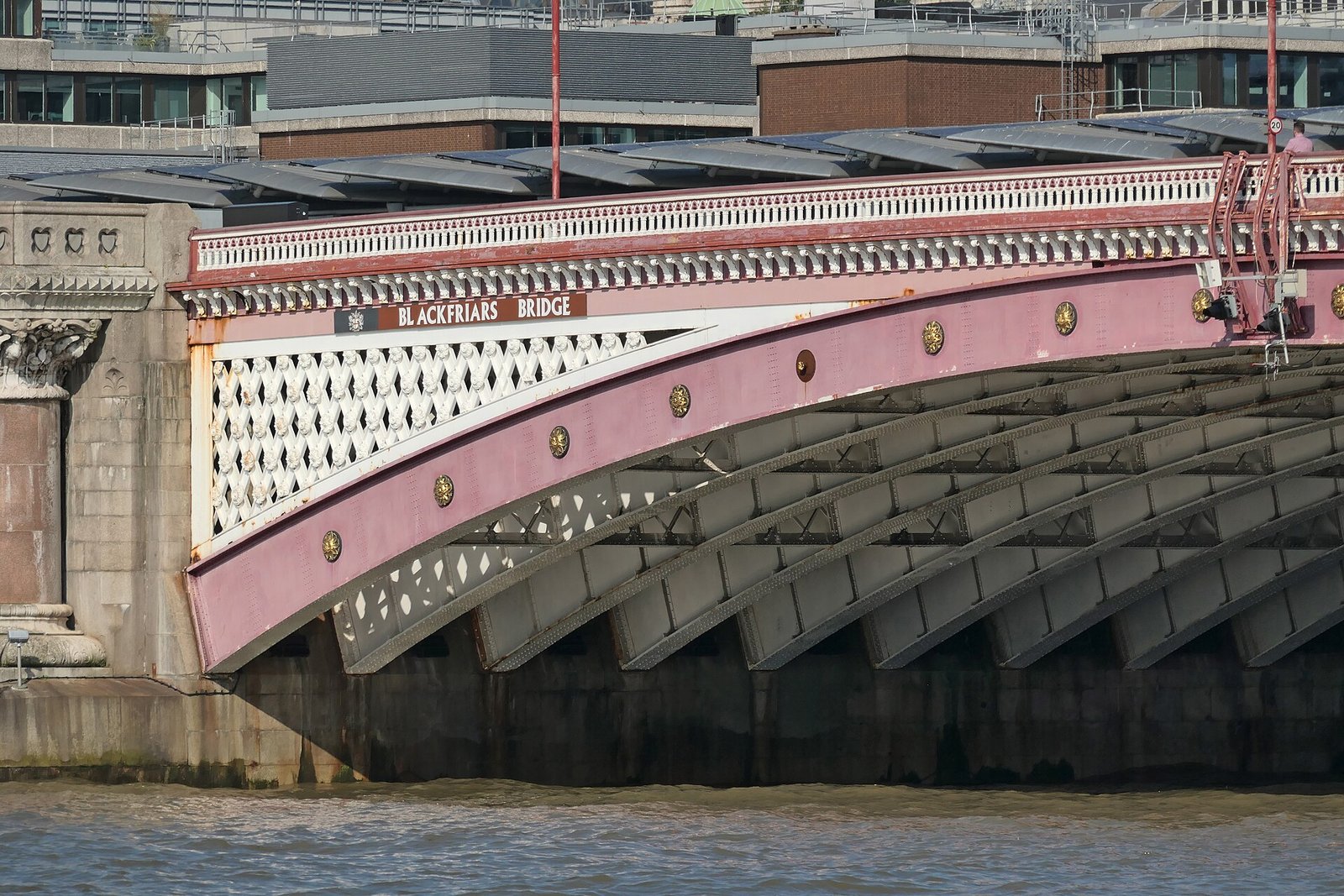
It is a small piece of visual storytelling. The bridge marks one point on the river, while the birds quietly point toward the two very different landscapes found in either direction.
The arrangement is confirmed by the Historic England photographic archive. To find the birds, move away from the traffic and look toward the stonework below deck level.
03 · Lambeth Bridge
Pinecones that Londoners keep calling pineapples
The stone objects perched above the obelisks at either end of Lambeth Bridge have inspired one of London’s most persistent pieces of bridge trivia. They are regularly described as pineapples, often with an accompanying story about the seventeenth century botanist John Tradescant.
The official heritage listing is more precise. It identifies the objects as pinecones, which were ancient symbols of hospitality. However, it also records their resemblance to pineapples and the traditional connection with Tradescant, who is buried nearby.
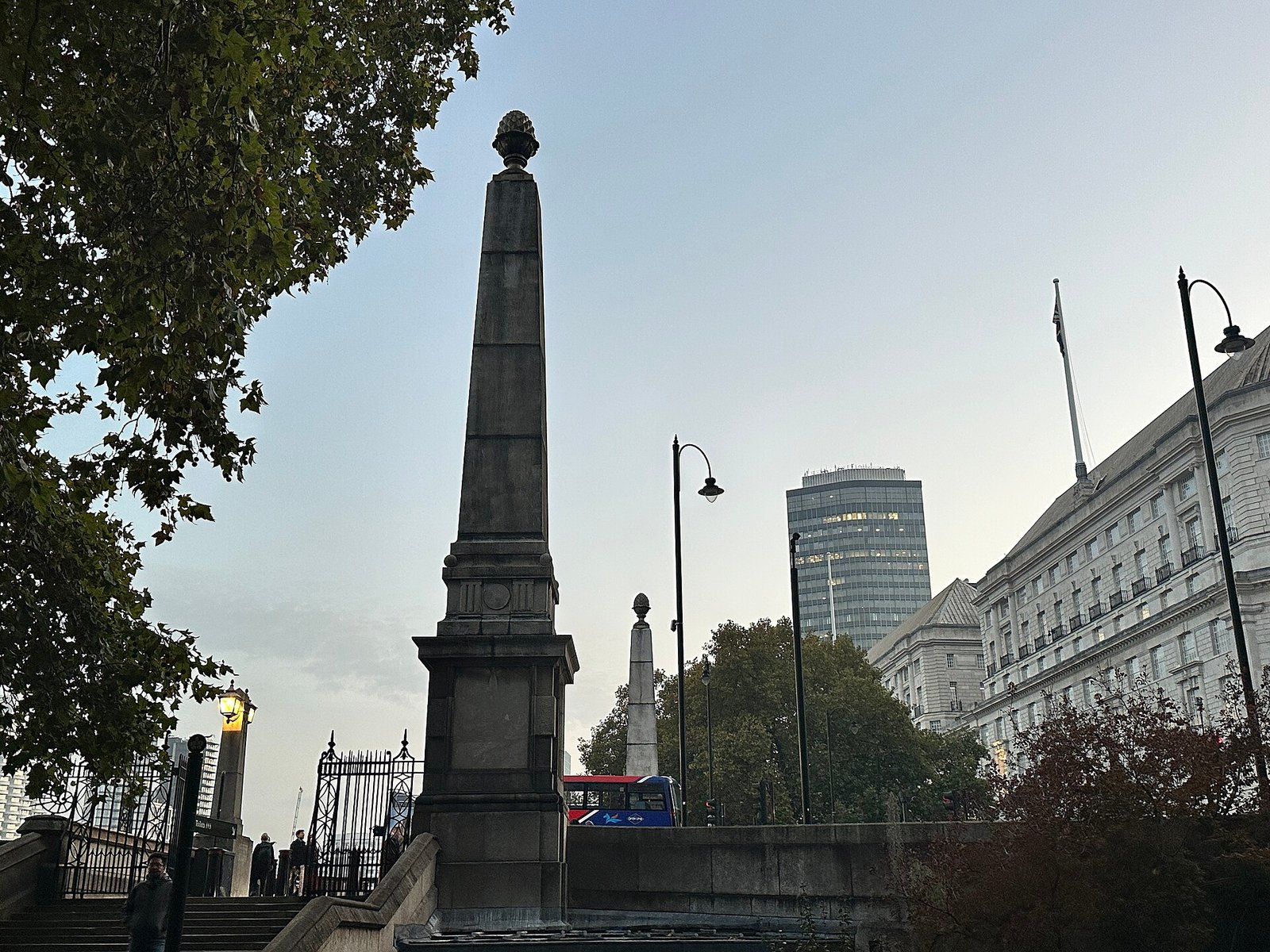
The distinction is useful because it allows the bridge to keep its curious local legend without presenting the pineapple explanation as settled fact. Read the wording in the official Lambeth Bridge listing and the answer is wonderfully London: they are pinecones that are also thought to resemble pineapples.
Spotter’s rule
A popular story is not always the complete story
Bridge folklore often begins with a real detail and grows around it. That does not make the story worthless, but it does make official listings, archives and contemporary records useful companions.
04 · Chelsea Bridge
Golden ships, county crests and peace doves
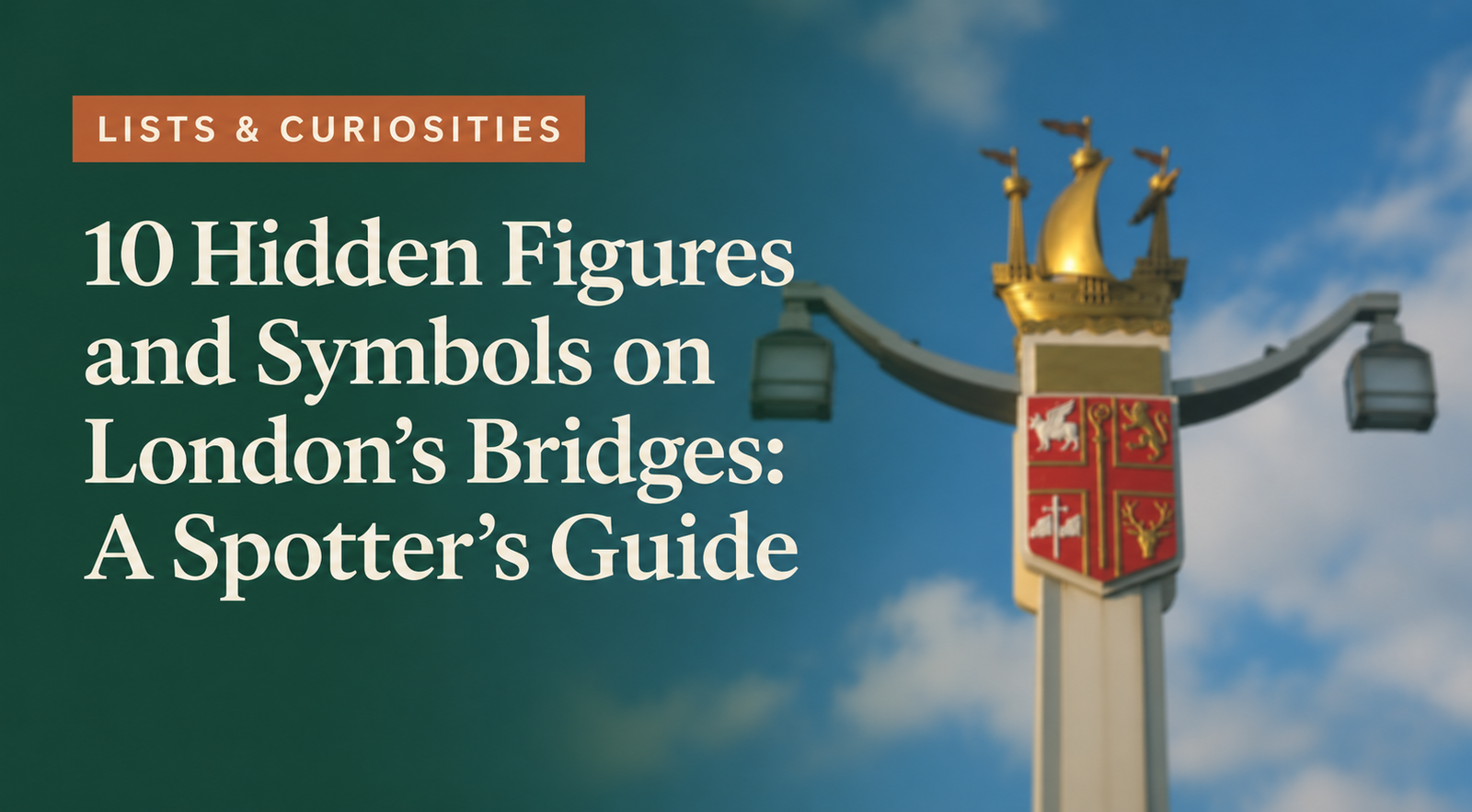
Chelsea Bridge has an elegant modern outline, but its smaller decorations are full of older civic symbols. Five sets of lampposts stand on each side of the bridge, decorated with golden galleons.
The four taller turrets at the ends carry an even richer collection. Look for golden ships above heraldic shields, crests associated with Middlesex and other counties around London, and doves carrying olive branches.
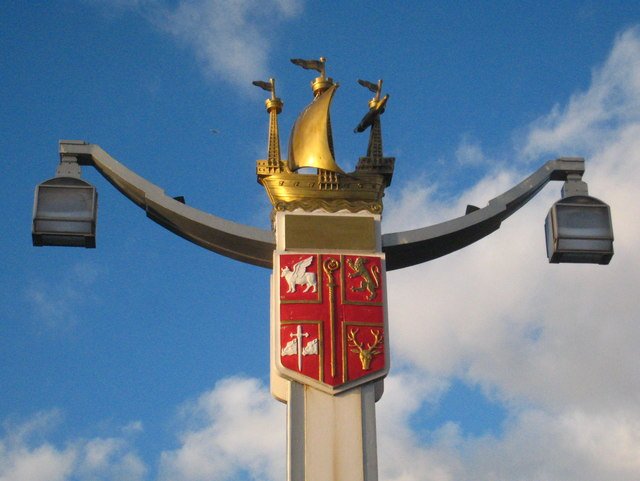
The symbols reward anyone who stops and looks upward. What first appears to be an ordinary lamp becomes a miniature arrangement of maritime history, local identity and peace symbolism.
The ships, shields and doves are recorded in the Historic England listing for Chelsea Bridge.
05 · Holborn Viaduct
A Victorian vision of how a successful city should work
Holborn Viaduct does not cross a river. It carries a road over the former valley of the River Fleet, but its decoration is every bit as elaborate as the grand Thames bridges.
Four classical female figures represent Science, Fine Art, Agriculture and Commerce. They present the qualities Victorian London believed a prosperous city should encourage: knowledge, culture, production and trade.
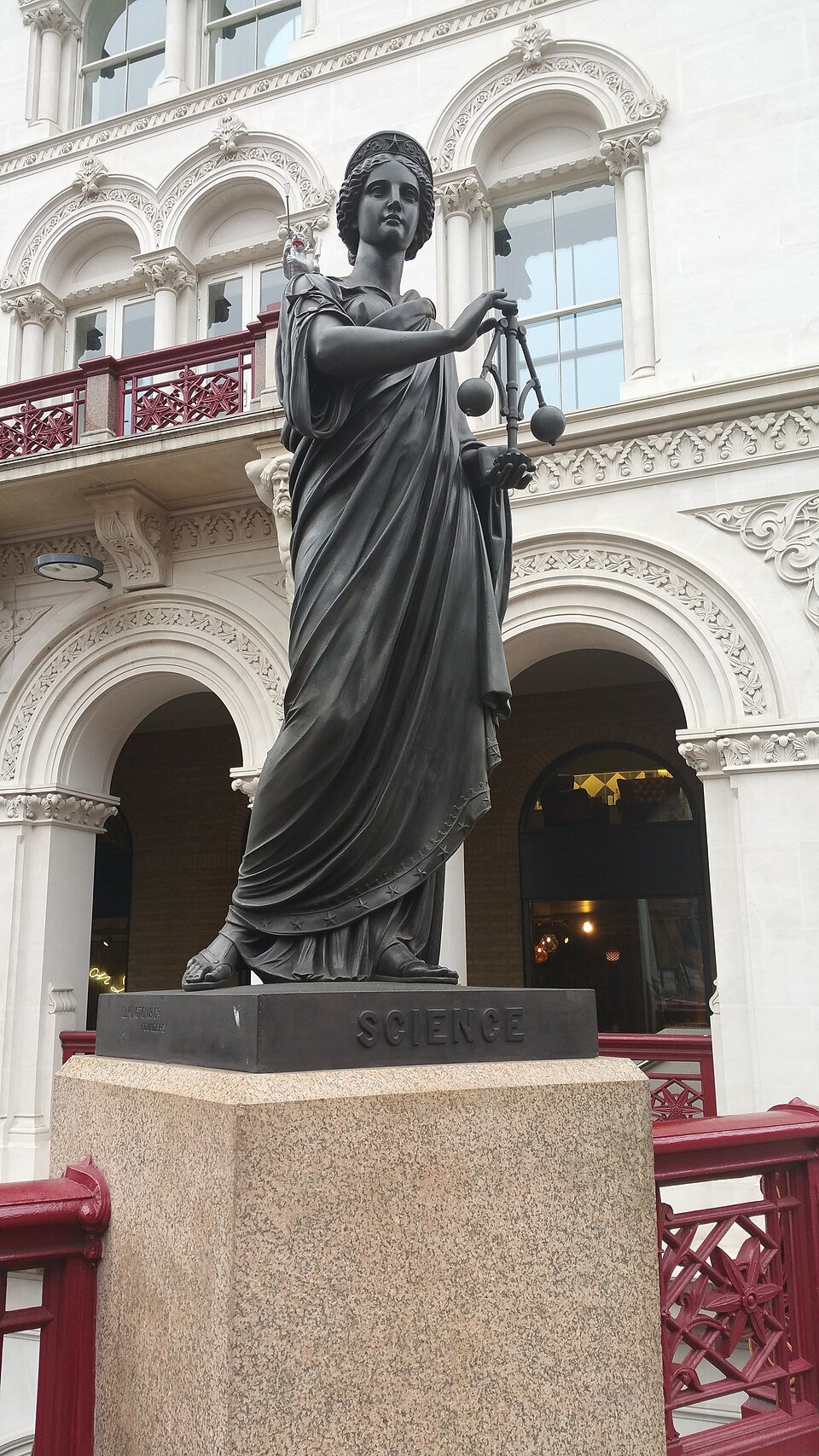
The viaduct also contains winged lions, seated dragons and stone figures of two former lord mayors, Henry FitzAilwin and William Walworth. Instead of a single hidden symbol, it offers an entire sculptural guide to civic London.
The London Museum’s history of Holborn Viaduct explores these decorations and the transformation of the area. We have also followed the story of William Haywood, the engineer who helped reshape Victorian London.
06 · Hammersmith Bridge
A painted map of authority and local identity
Hammersmith Bridge is famous for its ornate green and gold appearance, but the heraldic designs on its towers deserve closer attention.
The display brings together the Royal Arms of the United Kingdom and arms associated with Kent, Guildford, Westminster, Colchester, Middlesex and the City of London. They reflect the institutions and places connected with the bridge and its surroundings.
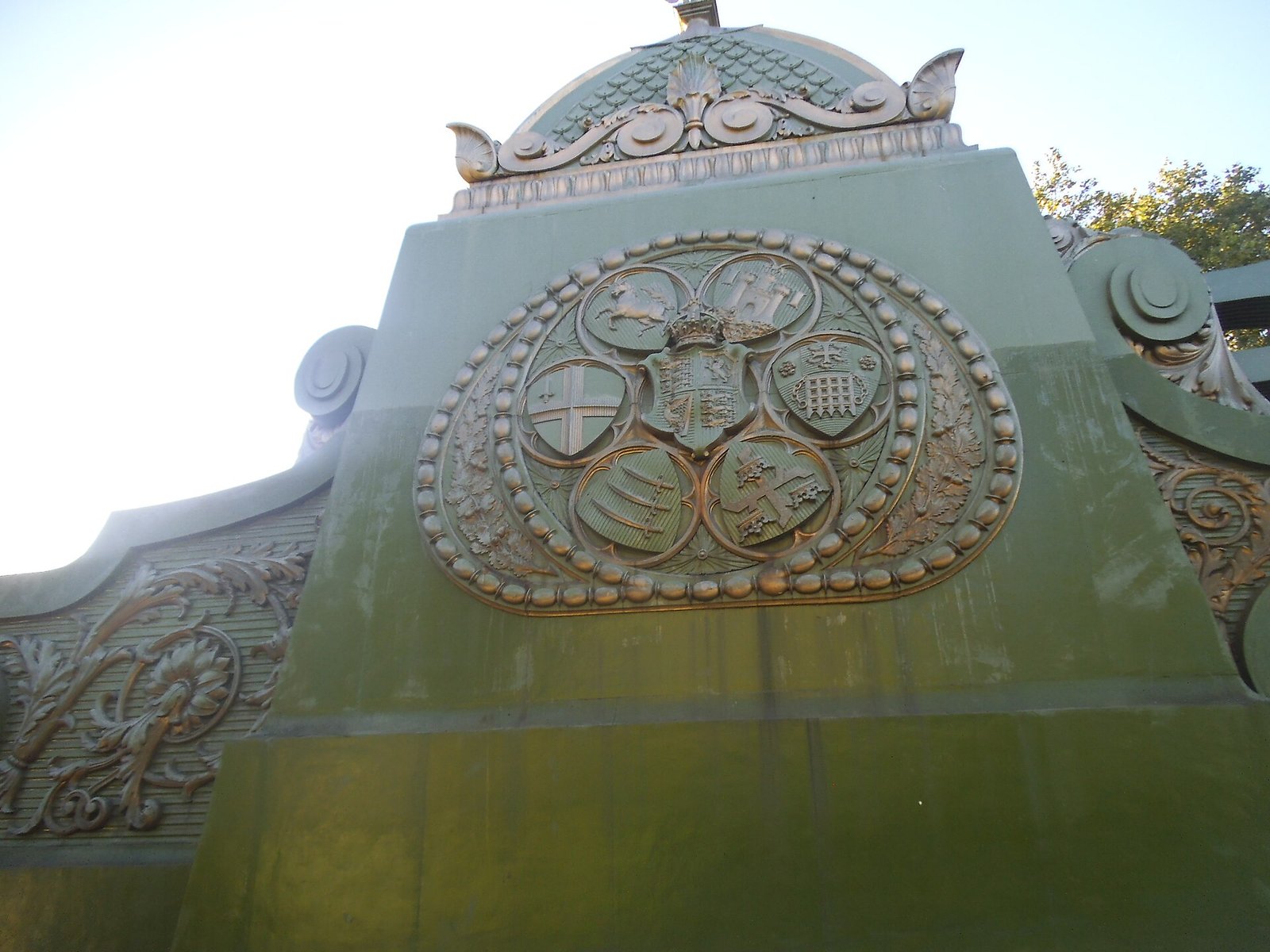
The current dark green and gold paint scheme follows the colors intended by the bridge’s engineer, Sir Joseph Bazalgette. Combined with the heraldry, it gives the towers the appearance of highly decorated ceremonial gateways.
You can find the bridge’s construction, decoration and original color scheme in the official Hammersmith Bridge listing.
07 · London Bridge
The dragons guarding an entrance to the City
At the southern end of London Bridge, two black creatures hold red and white shields. They are frequently called griffins, but the City of London identifies them as dragons.
The shield carries the red cross of St George and the small red sword associated with St Paul, the patron saint of the City. Dragons have supported the City’s shield in its coat of arms since the early seventeenth century.
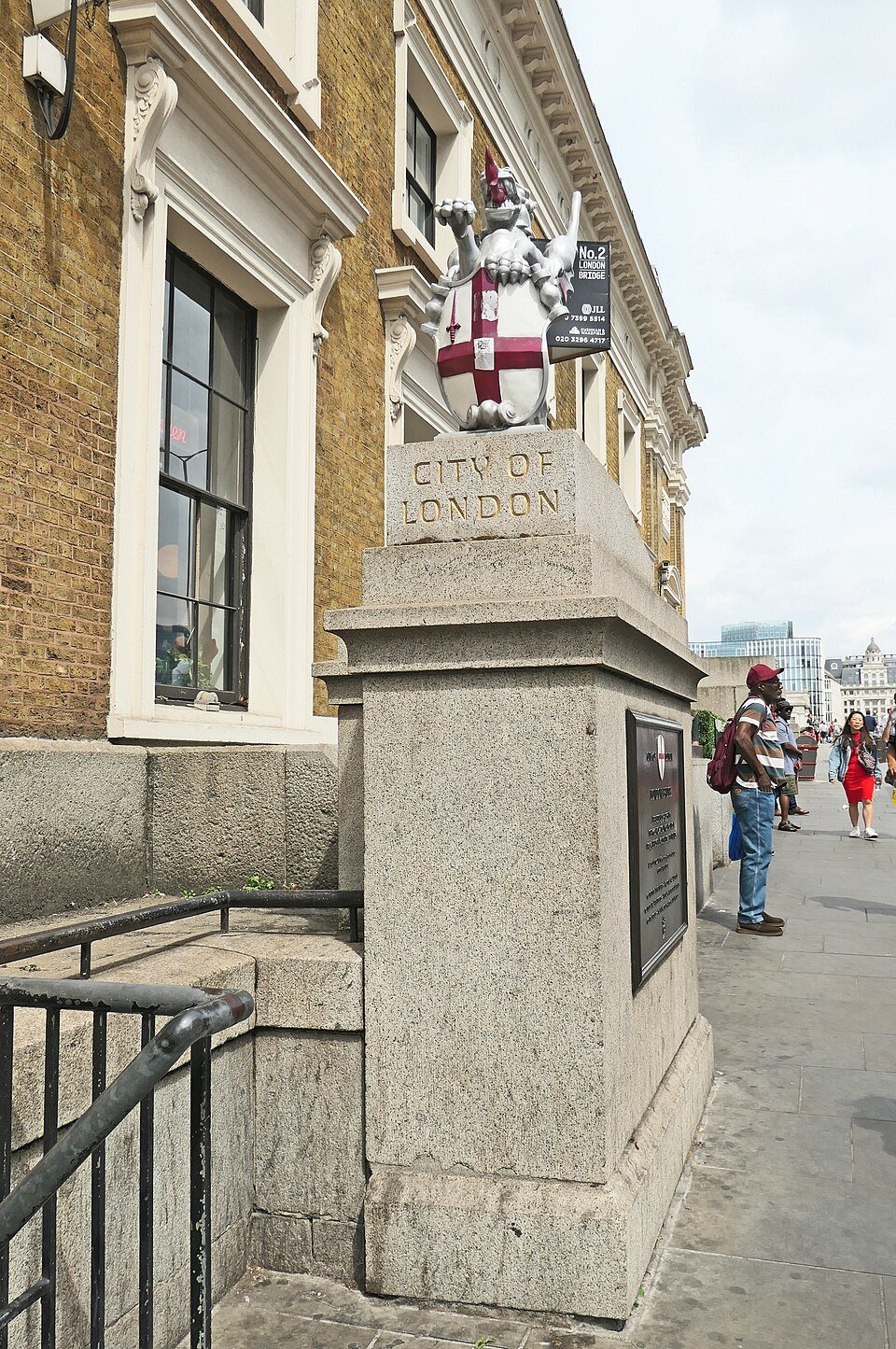
The dragons work as boundary markers. They tell travelers that they are approaching the historic City of London, the small jurisdiction at the center of the much larger modern capital.
According to the City of London’s guide to its dragons, the creatures represent protection in heraldic tradition. Once you recognize them, similar guardians can be found at several entrances to the City.
08 · Westminster Bridge
A bridge designed to speak Parliament’s language
The decoration of Westminster Bridge was designed to complement the neighboring Palace of Westminster rather than compete with it.
Its cast iron spandrels contain pierced panels and shields. Gothic patterns continue along the balustrades, while the lamp standards use Tudor Gothic forms and gilded finials.
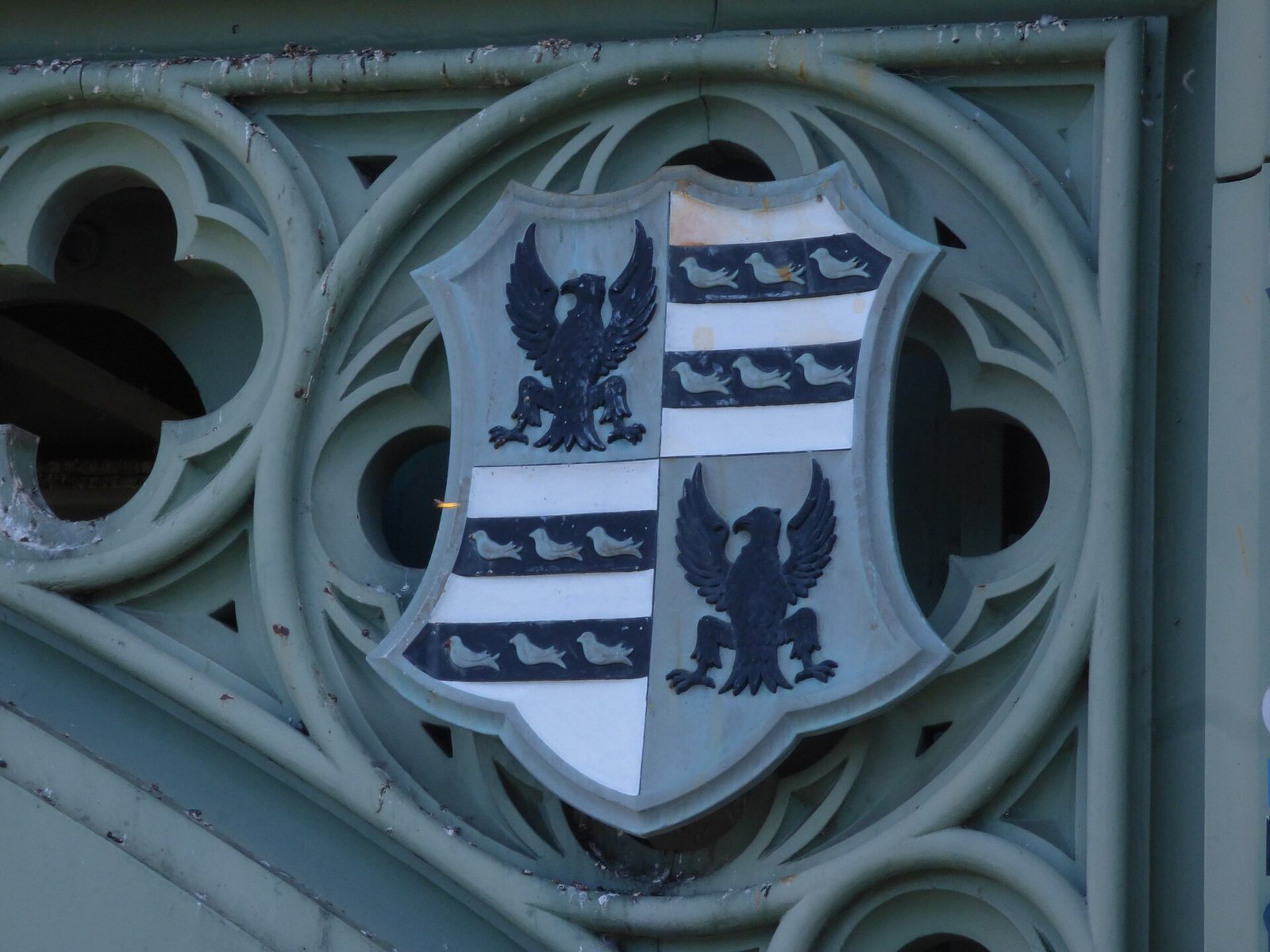
The result is a bridge that feels like part of the parliamentary complex, even though the crossing is a separate structure designed by Thomas Page.
The shields, pierced ironwork, lamp standards and gilded decoration are described in the Historic England record for Westminster Bridge.
09 · Tower Bridge
Hidden workers inside and beside the landmark
The most interesting figures at Tower Bridge are not medieval kings or mythical animals. Seven statues of construction workers are hidden within the internal roof structure of the South Tower, honoring some of the people who built the bridge.
Outside, the Blue Line leading from the South Tower toward the Engine Rooms contains 80 bronze plaques. Forty name people who helped build, operate or maintain the bridge. The others carry decorative designs connected with their work and lives.
One plaque remembers Hannah Griggs, who worked as a cook at Tower Bridge. It is followed by a design showing eels in a basket, a reference to the traditional London dish of jellied eels. Another commemorates John Chalk, who began working as a rivet boy at the age of 14.
The official guide to exploring inside Tower Bridge explains where to find the statues and plaques. It is a welcome reminder that famous structures are created and maintained by far more people than the names usually found on design drawings.
10 · Hampton Court Palace
A bridge guarded by the King’s Beasts
The stone bridge leading across the moat to Hampton Court Palace is guarded by ten shield bearing animals. Some are familiar, while others look as if they have escaped from a medieval bestiary.
The collection includes lions, dragons, a bull, a greyhound, a panther, a unicorn and the yale, a mythical creature with the body of an antelope, the tusks of a boar and horns said to swivel independently.
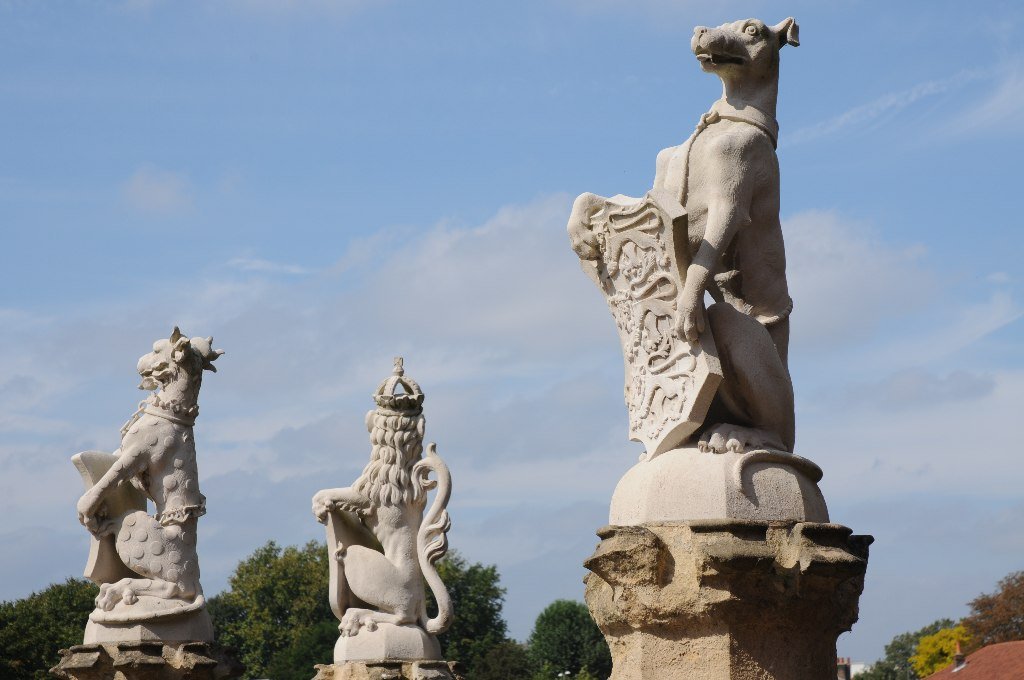
The animals and their shields were a form of royal branding. They displayed the ancestry, alliances and claimed legitimacy of Henry VIII and Jane Seymour to every important visitor approaching the Great Gatehouse.
The figures seen today are twentieth century replacements for Tudor originals, but they preserve the intended ceremonial approach. The Historic Royal Palaces guide to the Hampton Court beasts explains the identities and symbolism of the animals.
Try it yourself
How to become a better bridge spotter
Begin by stepping away from the road. Decorations are often placed on the outside faces of the piers, below the deck or high above the entrances.
- Look beneath the roadway from a riverside path.
- Check both the upstream and downstream sides.
- Study the bases and tops of lampposts.
- Look for repeated animals, shields and plants.
- Compare decorations on opposite sides of the bridge. Their differences may be deliberate.
London’s bridges tell their stories in small details
A bridge does not need an enormous tower or dramatic opening mechanism to tell a story. A carved bird, a model cathedral or a small heraldic shield can reveal why the bridge was built, who controlled it and what its designers wanted the crossing to represent.
These details also give familiar places a second life. Once you know that Blackfriars Bridge sorts its birds by habitat or that Vauxhall Bridge hides eight bronze figures below the traffic, crossing them becomes a different experience.
You can continue exploring through our growing collection of bridge profiles, where each crossing is connected with its location, design, history and surrounding stories.
Research
Sources and further reading
Explore the official heritage records and specialist sources used to identify and explain the figures and symbols in this guide.
-
Vauxhall Bridge and its eight bronze figures
Historic England -
Bird carvings on Blackfriars Bridge
Historic England Archive -
Lambeth Bridge, its pinecones and associated symbolism
Historic England -
Chelsea Bridge heraldry and decorative lampposts
Historic England -
The statues and history of Holborn Viaduct
London Museum -
Hammersmith Bridge heraldry and original color scheme
Historic England -
The protective symbolism of the City dragons
City of London Corporation -
Westminster Bridge’s Gothic decoration
Historic England -
Tower Bridge’s worker statues and Blue Line
Tower Bridge -
Hampton Court’s royal and heraldic beasts
Historic Royal Palaces
Information checked November 17, 2026.