Bridge profile
Holborn Viaduct, London
City of London, London, England
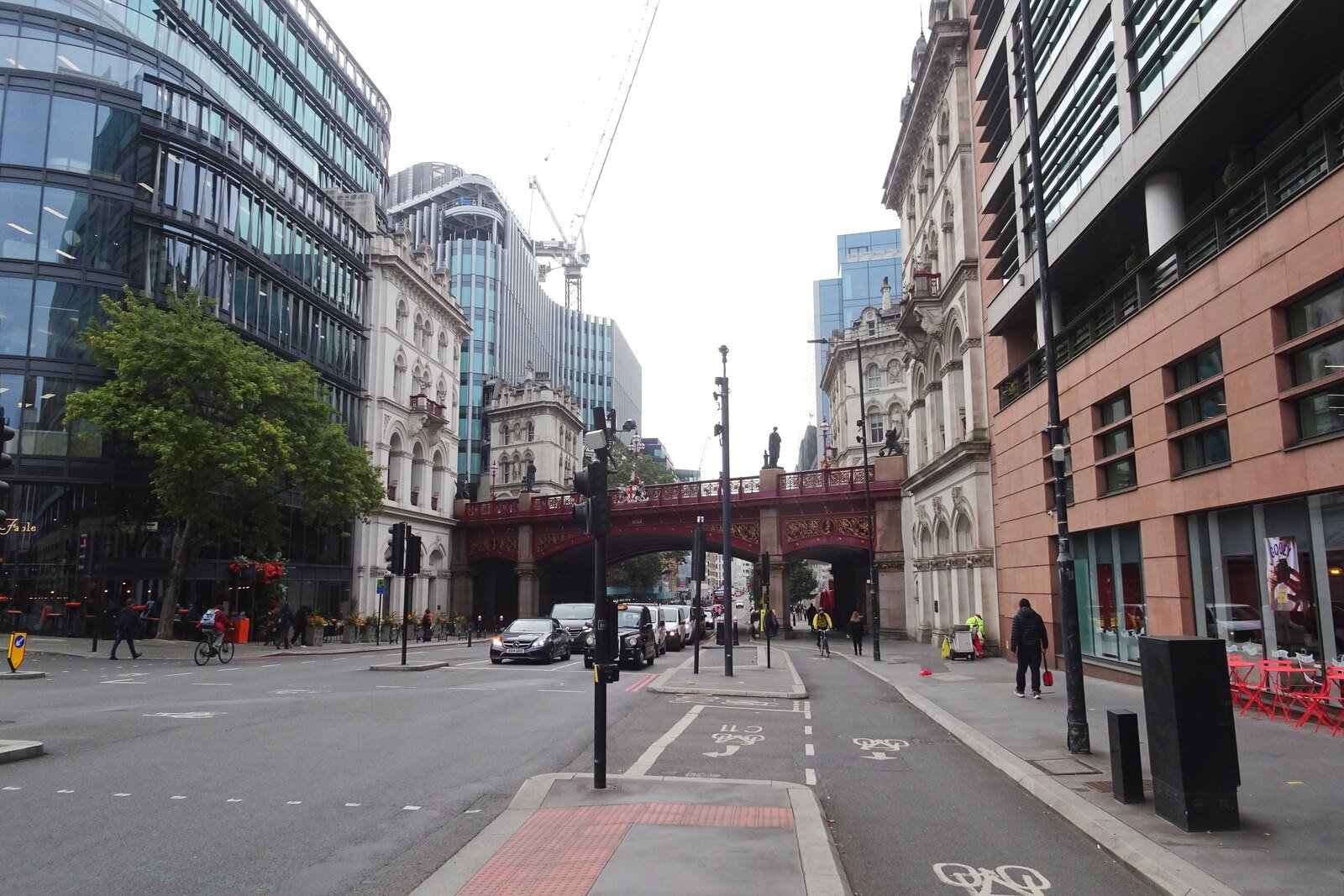
Opened by Queen Victoria in 1869, Holborn Viaduct carried London traffic across the steep Fleet Valley on an ornate cast iron crossing.
At a glance
Key facts
Location
City of London, London, England
First opened
November 6, 1869
Crosses
Bridge type
Visit and use
History
Alternative names
Farringdon Street Bridge
People and construction
Architect / designer
William Haywood
Engineer
Rowland Mason Ordish
Ownership and maintenance
Owner
City of London Corporation
Maintained by
City of London Corporation
Design and dimensions
From road level, Holborn Viaduct can feel like an ordinary London street with unusually grand railings. See it from Farringdon Street below and the full structure suddenly appears in bright red iron, polished stone and flashes of gold.
The viaduct was created to solve a problem caused by London’s landscape. Traffic traveling between Holborn and the City had to descend into the steep Fleet Valley before climbing back out. For heavily loaded horse drawn carts, that journey was slow, difficult and sometimes dangerous.
The short version
A level road across a hidden valley
Holborn Viaduct opened in 1869 to carry traffic above Farringdon Street and across the valley once occupied by the River Fleet. Its ornate cast iron bridge is only the most visible section of an elevated route stretching for around a quarter of a mile.
Why was Holborn Viaduct built?
Before the viaduct, the route between Holborn and the City crossed a deep dip in the land. Travelers descended Holborn Hill into the Fleet Valley before climbing Snow Hill on the opposite side.
Those slopes caused serious problems for horse drawn traffic. Carts carrying food, building materials and other heavy loads needed considerable effort to climb out of the valley. The route was particularly important for traffic heading toward Smithfield Market and the commercial streets of the City.
Holborn Viaduct formed part of the much larger Holborn Valley Improvements. The project also reshaped nearby streets, created Holborn Circus and improved connections between west London, Smithfield and the City.
The London Museum history of Holborn Viaduct includes images of the steep streets and crowded neighborhood that existed before construction began.
Does Holborn Viaduct cross the River Fleet?
It crosses the valley formed by the River Fleet, but it was never a bridge directly above an open river.
The Fleet had already been buried beneath the streets when the viaduct was constructed. Farringdon Street occupied part of its former valley, with the river continuing to flow through a covered channel underground.
The viaduct allowed east to west traffic to pass above Farringdon Street without descending into that valley. This is why the road on top can feel almost level even though the street below sits much lower.
Did you know?
Queen Victoria traveled under it and over it
Queen Victoria officially opened Holborn Viaduct on November 6, 1869. Her ceremonial procession passed beneath the new bridge before crossing over it, allowing the finished project to be seen from both levels.
How was Holborn Viaduct constructed?
The complete viaduct extends for approximately 1,400 feet, creating an elevated road between Holborn and Newgate Street. Much of that distance is supported by constructed ground, vaults and buildings rather than one continuous exposed bridge.
The most recognizable section is the crossing above Farringdon Street. It has three original cast iron spans supported by granite piers. The bridge crosses the street at an angle, adding another complication for its Victorian designers.
William Haywood, the City of London surveyor, designed the viaduct. Engineer Rowland Mason Ordish worked on its structural design. Ordish later became known for several adventurous iron structures, including work connected with the Royal Albert Hall.
The road deck was replaced during the early 1990s with a modern composite deck supported by steel girders. Much of the visible Victorian cast iron, granite and decorative work was retained, allowing the bridge to continue carrying present day traffic without losing its historic appearance.
Why is Holborn Viaduct so decorative?
The viaduct was more than a practical road project. It was designed as a grand entrance to the City of London and decorated accordingly.
Its red and gold ironwork includes the City of London coat of arms, winged lions, dragons, ornamental foliage and elaborate lamp standards. Classical figures represent Science, Fine Art, Agriculture and Commerce.
Stone statues also commemorate figures from London’s history, including Henry Fitz Ailwin, the first recorded Mayor of London, and William Walworth, who served as Lord Mayor during the Peasants’ Revolt.
The decoration makes the bridge feel almost ceremonial. Even its stair pavilions were designed as substantial architectural features rather than simple entrances between the two street levels.
Historic England recognizes this combination of engineering and decoration by protecting the bridge as a Grade II listed structure.
Five important dates
Holborn Viaduct timeline
1863
Clearance and construction work begins in the Fleet Valley.
1869
Queen Victoria officially opens Holborn Viaduct.
1874
Holborn Viaduct railway station opens beside the crossing.
1882
Edison’s company opens a pioneering power station nearby.
1990s
The original road deck is replaced with a modern composite deck.
What else was built around Holborn Viaduct?
The new route encouraged an extraordinary collection of transport, commercial and industrial buildings.
Holborn Viaduct railway station opened in 1874 with a large hotel facing the elevated road. The station closed in 1990 and was replaced by the underground City Thameslink station.
In 1882, Thomas Edison’s company opened a coal fired power station at 57 Holborn Viaduct. It supplied electricity to nearby buildings and streetlights during the earliest years of public electric lighting.
The surrounding area has been rebuilt repeatedly, particularly following bomb damage during the Second World War. The viaduct has remained a recognizable anchor while stations, hotels, offices and shops around it have changed.
Did Holborn Viaduct and Blackfriars Bridge open together?
Yes. Queen Victoria opened both structures on November 6, 1869 as part of a major day of civic celebration.
The two projects served different purposes. Holborn Viaduct improved travel across the Fleet Valley, while Blackfriars Bridge provided a new crossing of the Thames. Together, they formed part of a wider Victorian effort to improve movement through the City.
You can explore the river crossing through our Blackfriars Bridge, London profile.
Can you walk across Holborn Viaduct?
Yes. Wide sidewalks run along both sides of the elevated road, allowing pedestrians to cross between Holborn Circus and Newgate Street.
However, the best view is from Farringdon Street below. From there, the red cast iron spans, granite supports, statues and golden decoration can be seen together.
Looking up from the lower road also reveals why the structure is a viaduct rather than simply an ornate set of railings. At the upper level, the deep Fleet Valley has almost disappeared from view. From below, London’s hidden landscape becomes much easier to understand.
Research
Holborn Viaduct sources and further reading
Explore the museum collections, heritage records and City documents used to research this bridge profile.
-
The history of Holborn Viaduct and the Fleet Valley
London Museum -
Official heritage listing for Holborn Viaduct
Historic England -
Historic view and construction details
Historic England Archive -
Historic view of Holborn Viaduct above Farringdon Street
The London Archives -
Farringdon Street Bridge refurbishment and structural history
City of London Corporation
Information checked October 18, 2026.