Bridge profile
Blackfriars Bridge, London
City of London and Southwark, London, England, United Kingdom
Opened by Queen Victoria in 1869, Blackfriars Bridge combines red and gold ironwork, five shallow arches and carved birds that distinguish river from sea.
At a glance
Key facts
Location
First opened
November 6, 1869
Crosses
Bridge type
Visit and use
Nearest postcode / ZIP code
Bridge use
Status
Open to traffic
History
Alternative names
Blackfriars Road Bridge
People and construction
Architect / designer
Joseph Cubitt and H. Carr
Design and dimensions
Main materials
Total length
281 meters / 923 feet
Number of spans
5
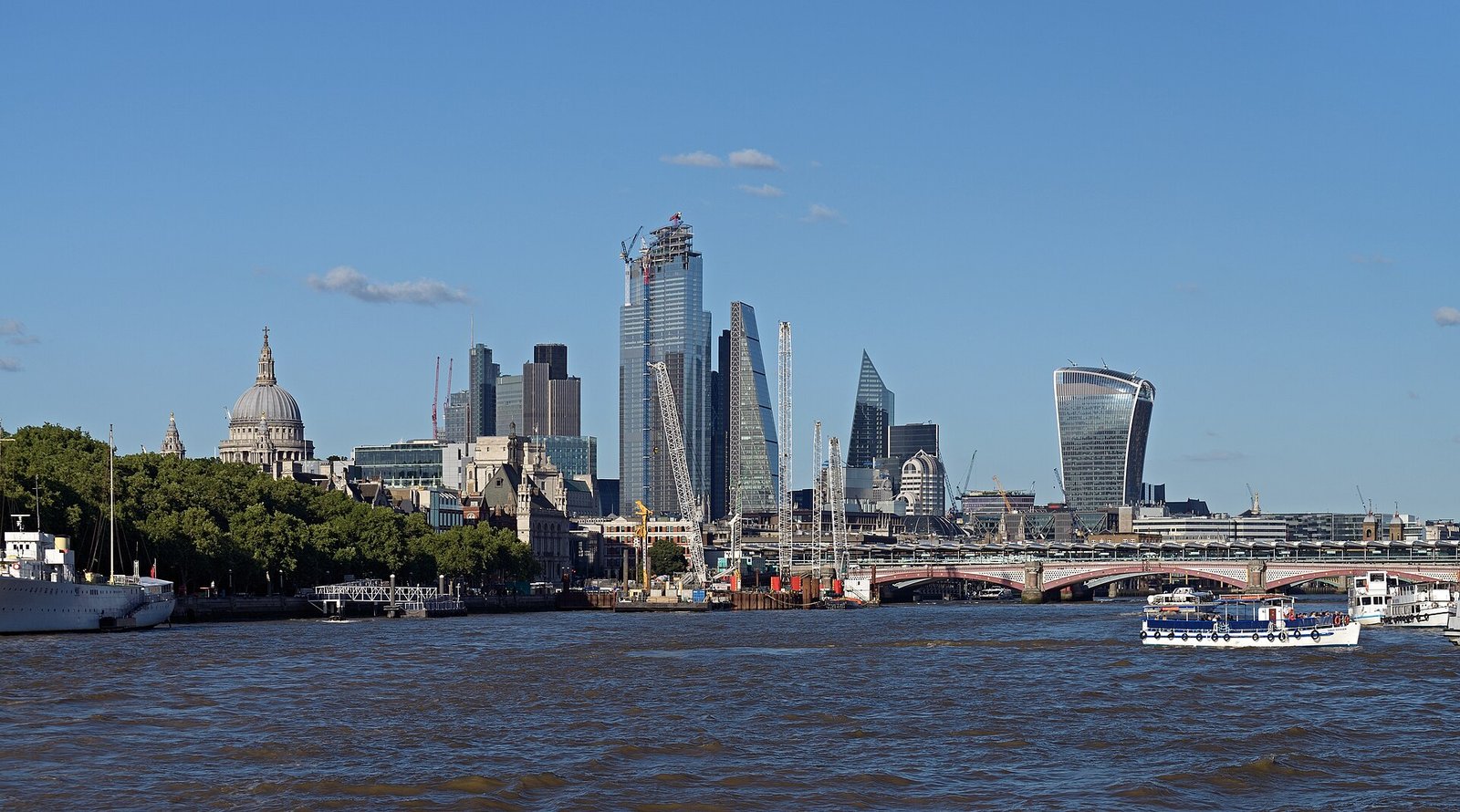
Blackfriars Bridge is easy to hurry across without noticing how much personality it has. Trains move beside it, traffic fills its broad roadway and the dome of St Paul’s Cathedral rises above the surrounding rooftops.
Look more closely and the bridge begins revealing its details. Its iron arches are painted red, white and gold, its stone piers resemble church pulpits, and carved birds quietly tell you which way the Thames is flowing.
The short version
London’s bridge of birds and iron
Blackfriars Bridge is a five-span iron arch bridge opened in 1869. Its colorful Victorian structure carries road traffic, pedestrians and cyclists across the Thames, while freshwater birds and seabirds decorate opposite sides.
When was Blackfriars Bridge built?
The present Blackfriars Bridge opened on November 6, 1869. Queen Victoria performed the opening ceremony almost exactly one century after the first bridge at this location entered service.
The date refers to the current crossing. An earlier Blackfriars Bridge had opened in 1769, making this one of London’s long-established bridge locations rather than a purely Victorian addition to the river.
The City Bridge Foundation history of Blackfriars Bridge records both crossings and the principal materials used in the present bridge.
Did you know?
Queen Victoria had a busy day
After opening Blackfriars Bridge on November 6, 1869, Queen Victoria continued to Holborn Viaduct and opened that too. She also visited the newly opened Smithfield Market during the same day.
Was there an older Blackfriars Bridge?
Yes. The first permanent Blackfriars Bridge was designed by Scottish architect Robert Mylne, who was only 26 when he won the design competition in 1760.
Mylne created an elegant Portland stone bridge with nine semi-elliptical arches. The shape was considered daring because London’s bridge builders were more accustomed to rounder arches.
The crossing opened in 1769 and became the third bridge across the Thames in central London after London Bridge and Westminster Bridge. Paintings from the period show its pale arches stretching across the river with St Paul’s Cathedral behind them.
The bridge did not age well. Polluted water from the nearby River Fleet entered the Thames close to its foundations and contributed to serious erosion of the stonework. Repairs prolonged its life, but the structure was eventually dismantled to make way for a stronger replacement.
A surviving foundation stone in the London Museum collection records the construction of the first Blackfriars Bridge and names Robert Mylne as its architect.
Why is it called Blackfriars Bridge?
The first crossing was initially called Pitt Bridge or William Pitt Bridge in honor of British statesman William Pitt the Elder. Londoners gradually favored a name connected to the surrounding area.
Blackfriars takes its name from a Dominican monastery established nearby during the thirteenth century. Dominican friars wore dark outer cloaks, earning them the familiar description of black friars.
The monastic connection appears in the current bridge’s design. The granite piers rise into pulpit-shaped projections, turning an old local name into part of the structure itself.
Who designed the current Blackfriars Bridge?
Civil engineer Joseph Cubitt is principally credited with designing the present bridge. The official City of London history also names H. Carr.
The new crossing used five shallow elliptical arches made principally from wrought iron. Decorative cast iron was used around the structure, while granite piers and Portland stone details gave it a suitably monumental appearance.
Blackfriars Bridge was widened between 1907 and 1910 to accommodate trams and heavier traffic. Steel arches were added alongside the Victorian structure, increasing its width to approximately 32 meters, or 105 feet.
Despite the additions, the original design remains clearly visible. The broad roadway sits above a surprisingly graceful series of red and white curves rather than heavy stone arches.
The City of London account of Blackfriars Bridge summarizes its designers, materials and early twentieth-century widening.
Why are there bird carvings on Blackfriars Bridge?
The birds are more than decoration. They provide a small carved guide to the direction of the river.
On the upstream side, facing west toward the freshwater Thames, the carvings depict freshwater birds. On the downstream side, facing east toward the estuary and the sea, the sculptures change to seabirds and marine life.
The carvings were designed by sculptor John Birnie Philip. They sit above the granite piers, where they can easily be missed by anyone concentrating on the road or skyline.
Look closely
The bridge works like a compass
Freshwater birds face upstream and seabirds face downstream. If you forget which way the Thames is flowing, the sculptures can point you toward the center of London or the sea.
Why is Blackfriars Bridge painted red?
The red, white and gold color scheme emphasizes the bridge’s iron construction and decorative details. Gold emblems stand out against the darker metalwork, while pale stone around the piers breaks up the long red arches.
The colors also connect the bridge visually with Holborn Viaduct, another major Victorian project opened by Queen Victoria on the same day.
Since 2021, Blackfriars Bridge has formed part of the Illuminated River artwork. Lighting beneath the arches uses soft red and mauve tones that complement the bridge and the surviving railway columns beside it.
The Illuminated River guide to Blackfriars Bridge explores its colors, sculptures, history and modern lighting.
What are the red pillars beside Blackfriars Bridge?
The freestanding red columns immediately east of the road bridge are not spare supports from Blackfriars Bridge. They are surviving parts of an earlier Blackfriars Railway Bridge.
The railway crossing was later removed, but rows of its red supports were left standing in the Thames. A modern railway bridge and Blackfriars station now occupy the neighboring crossing.
The result can look confusing from a distance. Blackfriars is not one enormous bridge with several unrelated sections. It is a close group of road, railway and former railway structures from different periods.
Four important dates
Blackfriars Bridge timeline
1760
Robert Mylne wins the competition to design the first bridge.
1769
The first Blackfriars Bridge opens across the Thames.
1869
Queen Victoria opens Joseph Cubitt’s replacement bridge.
1910
Widening is completed to accommodate trams and growing traffic.
Can you walk or cycle across Blackfriars Bridge?
Yes. Blackfriars Bridge is free to cross and has sidewalks on both sides. It also carries a north-south cycling route that has crossed the bridge since 2016.
The northern end is beside Blackfriars station, Victoria Embankment and the western edge of the City of London. The southern end connects with Blackfriars Road, Bankside and the Thames Path.
The bridge remains a busy road crossing, so the riverside paths below provide a calmer place to study its arches and stone piers. From the riverbank, the difference between the road bridge, railway bridge and surviving red railway supports becomes much clearer.
What should you look for at Blackfriars Bridge?
Start with the bird carvings on the piers. Compare the freshwater birds on the upstream side with the marine birds facing downstream.
At the southern end, look for the silver dragon marking the boundary of the historic City of London. Decorative tiles in the southern pedestrian subway also preserve an image of Robert Mylne’s original eighteenth-century bridge.
The red columns beside the road bridge are another essential detail. They make more sense once you know they belonged to an earlier railway crossing rather than the bridge carrying the road.
Finally, step back to see the whole group from the Thames Path. Blackfriars is at its most interesting when the Victorian road bridge, railway station, abandoned columns and modern skyline are all visible together.
What can you see from Blackfriars Bridge?
Looking west opens a long view toward the South Bank and Waterloo Bridge. The London Eye and the Palace of Westminster appear farther along the river.
St Paul’s Cathedral dominates the skyline to the north. On the southern bank, Tate Modern and the riverside walk are only a short distance away.
Follow the Thames east and you soon reach Millennium Bridge. Continue along the river and the route eventually leads toward Tower Bridge.
Blackfriars Bridge may not command attention as quickly as those landmarks, but it rewards anyone willing to slow down. Few London crossings combine colorful ironwork, hidden birds, monastic references and the remains of another bridge in such a compact space.
Research
Blackfriars Bridge sources and further reading
Explore the official histories, heritage records and museum sources used to research this bridge profile.
-
Official history of Blackfriars Bridge
City Bridge Foundation -
Blackfriars Bridge dimensions, restoration and historic facts
City Bridge Foundation -
Blackfriars Bridge official heritage listing
Historic England -
Blackfriars Bridge history, sculptures and illumination
Illuminated River -
The City of London’s Blackfriars Bridge history
City of London Corporation -
Foundation stone from the first Blackfriars Bridge
London Museum
Information checked October 3, 2026.