Bridge profile
Westminster Bridge, London
Westminster and Lambeth, London, England, United Kingdom
Opened beside the Houses of Parliament in 1862, Westminster Bridge combines seven iron arches, Gothic details and one of London’s most recognizable river views.
At a glance
Key facts
Location
First opened
May 24, 1862
Crosses
Bridge type
Visit and use
Nearest postcode / ZIP code
Bridge use
Status
Open to traffic
People and construction
Architect / designer
Thomas Page, with architectural detailing by Sir Charles Barry
Design and dimensions
Main materials
Total length
252 meters / 827 feet
Number of spans
7
Westminster Bridge stands in one of the busiest and most photographed parts of London, yet the bridge itself can be easy to overlook. Big Ben, the Palace of Westminster and the London Eye compete for attention on either side.
Look more closely and the crossing has a story of its own. The present bridge opened in 1862, replacing an earlier stone bridge that had transformed travel across London. Its seven iron arches, green paintwork and Gothic details were all shaped by the famous buildings around it.
The short version
The green gateway to Parliament
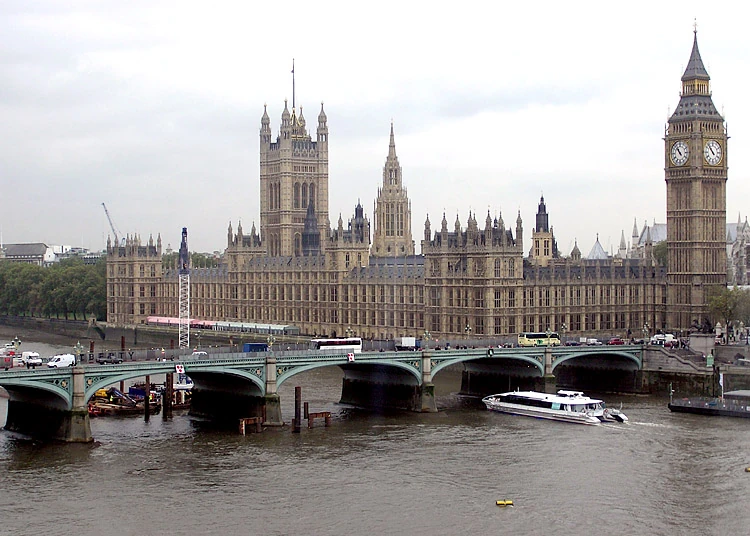
Westminster Bridge is a seven-arch road, pedestrian and cycling bridge across the River Thames. The present crossing opened on May 24, 1862 and is known for its green ironwork, a visual nod to the House of Commons beside it.
When was Westminster Bridge built?
The Westminster Bridge seen today opened on May 24, 1862. It is the second permanent bridge built at this location.
The first Westminster Bridge opened in 1750 after years of arguments, delays and construction problems. Before it arrived, people traveling between Westminster and the southern side of the Thames relied heavily on boats and ferries. London Bridge stood far downstream, while Putney Bridge was several miles to the west.
Thames watermen opposed the proposed crossing because they earned money carrying passengers across the river. The Archbishop of Canterbury also had an interest in the nearby horse ferry. Despite the opposition, growing congestion made another bridge increasingly difficult to avoid.
Construction began in 1738 under Swiss engineer Charles Labelye. Some of the bridge piers settled before the work was complete, causing repairs and further delays. The London Museum history of Westminster Bridge follows the project from the objections of the watermen to the opening procession in 1750.
Did you know?
The first bridge was funded partly by a lottery
The lottery raised far less money than expected, leaving the government to cover the gap. The troubled scheme helped Westminster Bridge earn the mocking nickname Bridge of Fools.
Why was Westminster Bridge rebuilt?
The first bridge was admired when it opened, but its foundations became a lasting problem. Repairs to the piers began in 1837, yet the structure continued to deteriorate.
The demolition of Old London Bridge in 1831 changed the way water moved through this part of the Thames. Stronger currents increased scouring around the foundations of Westminster Bridge, helping to weaken a structure that was already becoming difficult and expensive to maintain.
Parliament approved a replacement in 1853 and construction began the following year. The new crossing had to carry growing road traffic while looking at home beside the recently rebuilt Palace of Westminster. The Illuminated River history of Westminster Bridge explains how the old bridge gave way to the present Victorian crossing.
Who designed Westminster Bridge?
Engineer Thomas Page designed the main structure. Sir Charles Barry, the architect responsible for the Palace of Westminster, acted as architectural consultant and helped shape the Gothic Revival details.
The bridge uses seven elliptical iron arches supported by piers and abutments of gray granite. Decorative panels, shields, trefoils, lanterns and other Gothic details help connect the bridge visually with Parliament.
At approximately 252 meters, or 827 feet, the bridge is longer than it first appears from the riverbank. Its broad deck carries the A302 road as well as protected spaces for people walking and cycling.
Westminster Bridge has Grade II* status. The Historic England listing for Westminster Bridge records its seven spans, ironwork, granite supports and Victorian detailing.
A royal opening
Twenty-five guns for the new bridge
Westminster Bridge opened on Queen Victoria’s forty-third birthday. A twenty-five-gun salute marked both the new crossing and her twenty-five years on the throne.
Why is Westminster Bridge green?
The bridge is painted green in recognition of the leather seats in the House of Commons. The Commons chamber occupies the end of the Palace of Westminster closest to the bridge.
The color creates a pleasing contrast with Lambeth Bridge farther upstream. Lambeth Bridge is painted mainly red, traditionally associated with the House of Lords at the opposite end of the Palace.
Westminster Bridge carries more parliamentary details than its color alone. Its decorative ironwork includes the portcullis, the cross of St George, a thistle, shields and roses. At night, lighting beneath the arches continues the green theme without overwhelming the historic structure.
Four important dates
Westminster Bridge timeline
1738
Construction begins on the first permanent Westminster Bridge.
1750
The first stone bridge opens fully after delays and foundation repairs.
1862
The present iron bridge opens on Queen Victoria’s birthday.
2008
A five-year restoration of the bridge is completed.
What is the South Bank Lion beside Westminster Bridge?
At the eastern end of the bridge stands a large white lion on a granite plinth. It looks like a guardian created specially for the crossing, but it lived elsewhere for more than a century.
The South Bank Lion was made in 1837 for the Lion Brewery. It is formed from Coade stone, an artificial ceramic stone valued for its ability to survive harsh weather. When the brewery was demolished, the lion was saved and eventually placed beside Westminster Bridge after the Second World War.
The Historic England record for the South Bank Lion notes that it was installed at the wish of King George VI. The lion has its own Grade II* listing.
Why is Westminster Bridge famous in art and poetry?
The view from Westminster Bridge has attracted artists for centuries. Canaletto painted the first bridge in 1747, three years before it fully opened. Some details in his finished scene were imagined because the crossing was still incomplete.
JMW Turner, Claude Monet and James McNeill Whistler also found subjects around the bridge and the river. The present crossing remains a favorite viewpoint for the Palace of Westminster, Big Ben and the moving life of the Thames.
William Wordsworth gave the bridge a lasting place in literature with his 1802 sonnet Composed upon Westminster Bridge. The poem captures London in the stillness of early morning, long before modern traffic and sightseeing crowds filled the crossing.
Can you walk or cycle across Westminster Bridge?
Yes. Westminster Bridge carries road traffic, pedestrians and cyclists, and there is no charge to cross. Permanent protected cycle lanes and footways run in both directions.
Transport for London introduced the permanent barriers to create safer spaces across the bridge. Its Westminster Bridge walking and cycling safety update explains how the protected lanes were planned.
The bridge is wheelchair accessible, although the area can become extremely busy. Westminster Underground station is beside the western end, while the London Eye, County Hall and the South Bank begin at the eastern end.
What can you see from Westminster Bridge?
The best-known view looks toward the Palace of Westminster and Elizabeth Tower, commonly called Big Ben after its great bell. Looking the other way brings the London Eye and the former County Hall into view.
Downstream, the next crossings are Hungerford Bridge and the Golden Jubilee Bridges, followed by Waterloo Bridge. Continue east along the river and you can reach Millennium Bridge before walking onward toward Tower Bridge.
The walk across Westminster Bridge is short, but slowing down reveals the symbols in the ironwork, the old lanterns, the South Bank Lion and a view that generations of artists have tried to capture.
Research
Westminster Bridge sources and further reading
Explore the museum histories, heritage records and transport information used to research this bridge profile.
-
The history of Westminster Bridge
London Museum -
Westminster Bridge design, history and lighting
Illuminated River -
Westminster Bridge official heritage listing
Historic England -
The South Bank Lion heritage record
Historic England -
Permanent walking and cycling safety measures
Transport for London -
Records of the Westminster Bridge Commissioners
The London Archives
Information checked October 3, 2026.