Bridge profile
Cast Iron Roving Bridge, Birmingham
Old Turn Junction, Birmingham, West Midlands, England
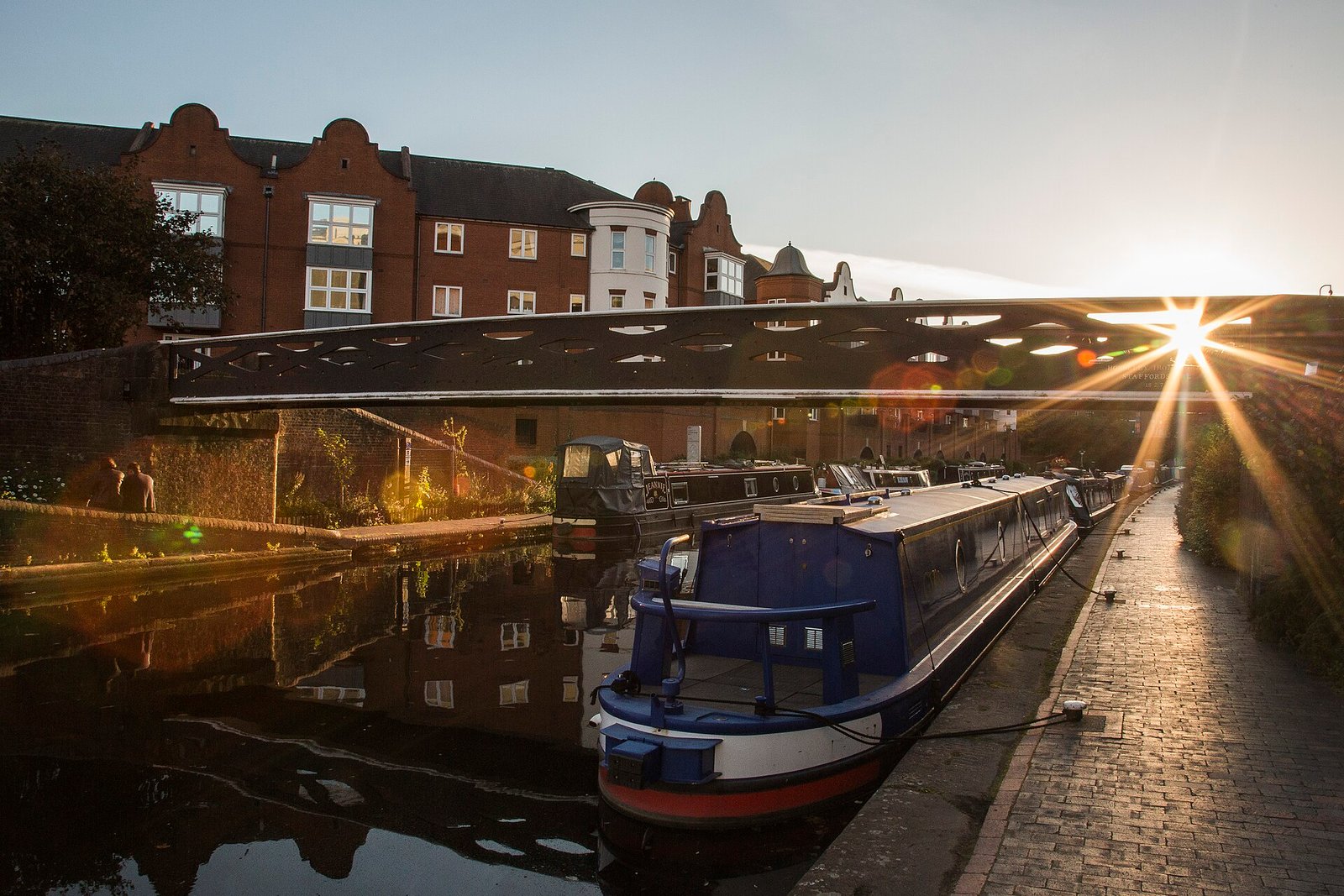
Built in 1827, Birmingham’s Cast Iron Roving Bridge carried the canal towpath over the water without forcing working horses to be unhitched from their boats.
At a glance
Key facts
Visit and use
History
Alternative names
Roving Bridge over the Birmingham and Wolverhampton Line
People and construction
Engineer
Thomas Telford (associated canal improvement scheme)
Builder / main contractor
Horseley Ironworks, Tipton
Ownership and maintenance
Maintained by
Canal & River Trust
Design and dimensions
At first glance, Birmingham’s Cast Iron Roving Bridge looks almost too elegant for the heavy work once carried out around it. Its slender iron deck, patterned parapets and sweeping brick approaches belong to an age when canal infrastructure could be practical and decorative at the same time.
The bridge was built in 1827 to keep the towpath moving across the Birmingham Canal Main Line. Horses could climb its ramps, cross the water and continue pulling their boats without the rope becoming tangled around the bridge.
The short version
A bridge built to keep horses moving
Horseley Ironworks cast this pedestrian bridge in 1827 during a major period of improvement on Birmingham’s canals. Its ramps carried the towpath over the water while allowing a horse and its towrope to continue around the junction.
What is a roving bridge?
Before powered narrowboats became common, horses walked beside canals and pulled boats using long towropes. Things became awkward whenever the towpath changed sides or crossed the entrance to another canal.
Simply building an ordinary footbridge could leave the towrope wrapped around a parapet or trapped beneath the structure. Boat crews would then need to stop and unhitch the horse before continuing.
A roving bridge solved the problem with carefully arranged approaches. The horse could climb the ramp, cross the canal and return to the towpath while the rope remained connected to the boat.
These structures are also called turnover bridges or snake bridges. Their exact shape varies, but each was designed around the movement of the horse, rope and boat rather than pedestrians alone.
The Inland Waterways Association guide to canal bridges explains how roving bridges prevented towropes from becoming tangled when paths changed sides.
Built around the towrope
The bridge made sense from the horse’s point of view
The sweeping approaches were not added simply for appearance. Their shape allowed a working horse to cross the water and return to the towpath without bringing the boat to a halt.
Why was the bridge built in 1827?
Birmingham’s canal system was becoming too important and too busy to remain unchanged. The early canal followed a winding route that avoided major changes in ground level, but this added distance and slowed working boats.
Engineer Thomas Telford was asked to inspect the Birmingham Canal in 1824. His improvement program introduced wider channels, straighter routes, deep cuttings and new connections between different sections of the network.
By 1827, a wider and deeper line had been cut westward from Birmingham. New roving bridges were needed where towpaths crossed canal junctions and changing routes.
The Cast Iron Roving Bridge belongs to this period. Historic England describes it as a standard roving bridge type created during Telford’s improvements to the Birmingham Canal Navigations.
The history of the Birmingham Canal Main Line follows Telford’s attempt to shorten and improve the route through the West Midlands.
Who built the Cast Iron Roving Bridge?
The ironwork was produced by Horseley Ironworks in Tipton. The company became one of the most important manufacturers of canal bridges in the West Midlands and supplied structures across the Birmingham Canal Navigations.
The bridge still carries the words “Horseley Iron Works Staffordshire 1827,” turning part of the structure into its own maker’s plate.
Cast iron suited this kind of crossing. It allowed the bridge to use a relatively light and shallow span while remaining strong enough to carry horses and towpath traffic above the canal.
Historic England records the structure as an unusually flat span made from two large castings. Deck panels are bolted into their lower flanges, creating a practical walkway between the parapets.
Look closely
The pattern is part of the structure
The repeating X shapes along the parapets reduce the amount of iron required while giving the bridge a clear visual identity. Similar patterns appear on other Horseley bridges across the canal network.
What materials were used?
The deck and parapets are cast iron. They rest on swept brick abutments laid in English bond, with shaped ashlar stone used around the footings.
This combination lets each material perform a different job. Iron forms the light crossing, brick builds the substantial approaches and stone protects and strengthens the points where the bridge meets its supports.
The double ramps make the bridge appear longer and more sculptural than its single span suggests. They also preserve the flowing route required by horses using the towpath.
Why is the bridge Grade II listed?
The bridge was added to the National Heritage List for England in 1982. Its interest comes from its early cast iron construction, unusual flat span, surviving Horseley details and connection with the improvement of Birmingham’s canal system.
It is also a reminder that important industrial design was not limited to factories, engines and enormous railway structures. Small towpath bridges were carefully designed pieces of working infrastructure.
The complete Historic England listing for the Cast Iron Roving Bridge records its construction, materials and protected Grade II status.
Is this the only roving bridge at Old Turn Junction?
No. Another cast iron roving bridge dating from 1827 crosses the entrance to the Birmingham and Fazeley Canal nearby.
The two bridges are easy to confuse, but their structures are different. The Cast Iron Roving Bridge immediately west of the junction has a notably flat span. Its neighbor uses a more obvious elliptical arch with decorated X shapes and quatrefoils in its parapets.
Together they show how the same basic problem could produce different bridge designs within a remarkably small area.
Can you visit the Cast Iron Roving Bridge?
Yes. The bridge remains part of the pedestrian route beside the canal near Old Turn Junction and Arena Birmingham. The most useful visitor postcode is B1 2AA.
The bridge sits between Old Turn Junction and the Sheepcote Street visitor moorings. From here, visitors can continue toward Brindleyplace and Black Sabbath Bridge, or follow the canal west toward Ladywood.
The Canal & River Trust city center walk crosses the Grade II listed bridge and continues through Old Turn Junction toward Gas Street Basin.
Small bridge, clever solution
Industrial design at walking speed
The Cast Iron Roving Bridge was not built to dominate Birmingham’s skyline. It was built to solve a daily problem for horses, boat crews and towropes. Almost two centuries later, that solution remains both useful and surprisingly graceful.
Research
Cast Iron Roving Bridge sources and further reading
Explore the heritage records and canal histories used to research this Birmingham bridge profile.
-
Grade II listing for the Cast Iron Roving Bridge
Historic England -
Birmingham canal walk through Old Turn Junction
Canal & River Trust -
History of the Birmingham Canal Main Line
Inland Waterways Association -
History and design of canal roving bridges
Inland Waterways Association -
The neighboring 1827 roving bridge at Fazeley Junction
Historic England
Information checked November 17, 2026.